Showing posts with label 2010 Lunar Eclipse. Show all posts

Tuesday, December 21, 2010

Lunar Eclipse December 20th and Lunar Eclipse Live Camera


Lunar Eclipse Live Camera - Million of people around the world have witnessed this rare event in the sky as the Lunar Eclipse shine out in the sky as the Winter Solstice 2010 exit. Now, if you have stayed awake last night to watch the lunar eclipse, you will probably realize you should have been in bed or at least been drinking.

Apparently, the lunar eclipse 2010 is certainly an event worth checking out. But some areas that are experiencing rain, snow or otherwise non-clear viewing conditions can look online for live feed video to watch it all unfold.

According to the recent report from NASA website, the Alabama center has had some cloud cover with a few intermittent breaks. Meanwhile, Neil deGrasse Tyson, director of the Hayden Planetarium in New York, tells MSNBC that the eclipse begins at 12:29 a.m. ET and takes five and a half hours to get through the 12 stages of the eclipse. Tyson recommends watching the lunar eclipse at its peak on the East coast – 2:45 to 3:00 in the morning.

After the said rare sky phenomenon, many people filmed the last night and captured its cosmic mundanity. The Lunar eclipse live camera is available anywhere in the internet, whether in Youtube or in many site. You can check it out now specially for those who have not witnessed it few hours ago.

Furthermore, the Google Earth’s Sky feature will present an ongoing visual of the celestial event, which will stretch for several hours beginning around 10:30 pm PST. All viewers are advised to go to the Slooh Space Camera section, known as a “layer” to watch it now.
  
Source:

Lunar Eclipse December 20th and Lunar Eclipse Live Camera


Related searches 

post it,how tall is michael phelps, how tall is snooki, michael phelps, michael phelps height, lebron james height,wheres the beef, melts in your mouth slogan, melts in your mouth not in your hand slogan, melts in your mouth not in your hand,melts in your mouth not in your hand, where s the beef, melts in your mouth slogan, 

Monday, December 20, 2010

Lunar Eclipse Tonight: 2010 Winter Solstice To Coincide With Total Full Moon Eclipse On December 20, 21

Multiple astronomical events are lining up for a rare display of synchronization tonight as a total lunar eclipse overlaps with 2010's winter solstice.

Depending on the location, late night December 20 or early morning December 21, the full moon will be darkened by Earth's shadow as our planet passes between it and the sun. December 21 is also the winter solstice, the longest night of the year, after which the days will begin to grow longer. Coupled with the lunar spectacle, it means we're in for an especially dark eve.

According to The AP, North and Central America should both be able to view the entire eclipse, which is estimated to take about 3.5 hours. Total eclipse will begin at 11:41 p.m. PST on Monday, or 2:41 a.m. EST on Tuesday -- so obviously West Coasters will have a better chance to catch the magnificent sight without dragging around heavy eyelids and needing an extra dose of espresso the following morning. If you want to set an alarm to catch a brief glimpse of the amber moon, NASA recommends 3:17 a.m. EST for the optimal impression.

According to AolNews.com, NASA reports that this is the first time an eclipse has coincided with a solstice since December 21, 1638, and the next one won't come around again until 2094. The extravaganza in the sky doesn't end there, however, as the Ursids meteor shower will also be taking place. CityStateTime.com reports that this particular annual show is rarely witnessed compared to its brighter counterparts, but stargazers will have an especially exceptional chance to view the display this year because of the eclipse's darkened sky.

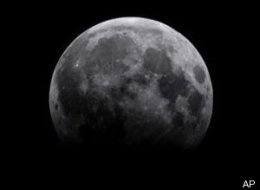
Check out photos below of past total and partial lunar eclipses to get an idea of what's in store tonight, and CLICK HERE to learn more about the winter solstice.

Source:

Lunar Eclipse Tonight: 2010 Winter Solstice To Coincide With Total Full Moon Eclipse On December 20, 21


Sunday, December 19, 2010

Lunar Eclipse 2010, Winter Solstice To Overlap On December 21

LOS ANGELES — 'Twill be nights before Christmas and high overhead, the moon will turn brown or maybe deep red. The Earth and the sun with celestial scripts will conspire to make a lunar eclipse.

Weather permitting, sky gazers in North and Central America and a tiny sliver of South America will boast the best seats to this year's only total eclipse of the moon.

The eclipse will happen Monday night on the West Coast and during the wee hours Tuesday on the East Coast. Western Europe will only see the start of the spectacle while western Asia will catch the tail end.

The moon is normally illuminated by the sun. During a total lunar eclipse, the full moon passes through the shadow created by the Earth blocking the sun's light. Some indirect sunlight will still manage to pierce through and give the moon a ghostly color.

Since the eclipse coincides with winter solstice, the moon will appear high in the sky – a boon for skywatchers. With recent volcanic eruptions around the globe dumping tons of dust into the atmosphere, scientists predict the moon may appear darker than usual during the eclipse, glowing an eerie red or brown instead of the usual orange-yellow tinge.

North and Central America should be able to view the entire show, which is expected to last 3 1/2 hours if skies are clear. Total eclipse begins at 11:41 p.m. PST Monday or 2:41 a.m. EST Tuesday. The totality phase – when the moon is entirely inside Earth's shadow – will last a little over an hour.

"It's perfectly placed so that all of North America can see it," said eclipse expert Fred Espenak of NASA's Goddard Space Flight Center.

The Griffith Observatory perched on the south slope of Mount Hollywood in Los Angeles will host an eclipse party Monday evening although rain is forecast. Telescopes will be set out on the lawn for the public and astronomers will give free lectures on the eclipse's various stages.

If clouds or rain set in, the observatory plans to stream live video of the eclipse from the Internet. Among the various outfits that will show the eclipse live is NASA, which has a camera mounted at its Marshall Space Flight Center in Huntsville, Ala.
"Our event will go on rain or shine," said Griffith Observatory astronomer Anthony Cook.

Unlike solar eclipses which require protective glasses, lunar eclipses are safe to watch with the naked eye.

U.S. Naval Observatory spokesman Geoff Chester finds solar eclipses more exciting than the lunar counterpart. But solar eclipses tend to occur in remote parts of the world while lunar eclipses are usually visible from an entire hemisphere.

"If you get skunked by bad weather, all you have to do is wait a few years for the next one to come around," Chester said.

There are two total lunar eclipses in 2011 – in June and December. North America will miss the June show and witness only a part of next December eclipse.
___
AP Science Writer Malcolm Ritter in New York contributed to this report.
___
Online:
NASA eclipse page: http://eclipse.gsfc.nasa.gov/eclipse.html
Griffith Observatory: http://www.griffithobservatory.org

Source: